
Pacifiers (binkies, soothers, dummies) are common tools to calm infants. They can help babies self-soothe and even reduce SIDS risk by more than half when used at naps or bedtime. However, extended pacifier use can lead to “pacifier teeth” – dental problems caused by constant sucking pressure. In this guide, we cover pacifier teeth, including what causes them, how they affect a child’s teeth, and how to prevent or fix any damage.
Figure: A newborn baby peacefully sleeping with a pink pacifier. Pacifier use is very widespread – up to 75% of babies use a pacifier at some point – and pediatric experts recommend it for reducing SIDS during sleep. But understanding pacifier teeth is important. If a pacifier habit continues too long, it can shift a child’s teeth and jaw. Health professionals define pacifier teeth as tooth misalignments (malocclusions) caused by prolonged pacifier or thumb-sucking. These include issues like open bites and crossbites, which we explain below.
What Are Pacifier Teeth?
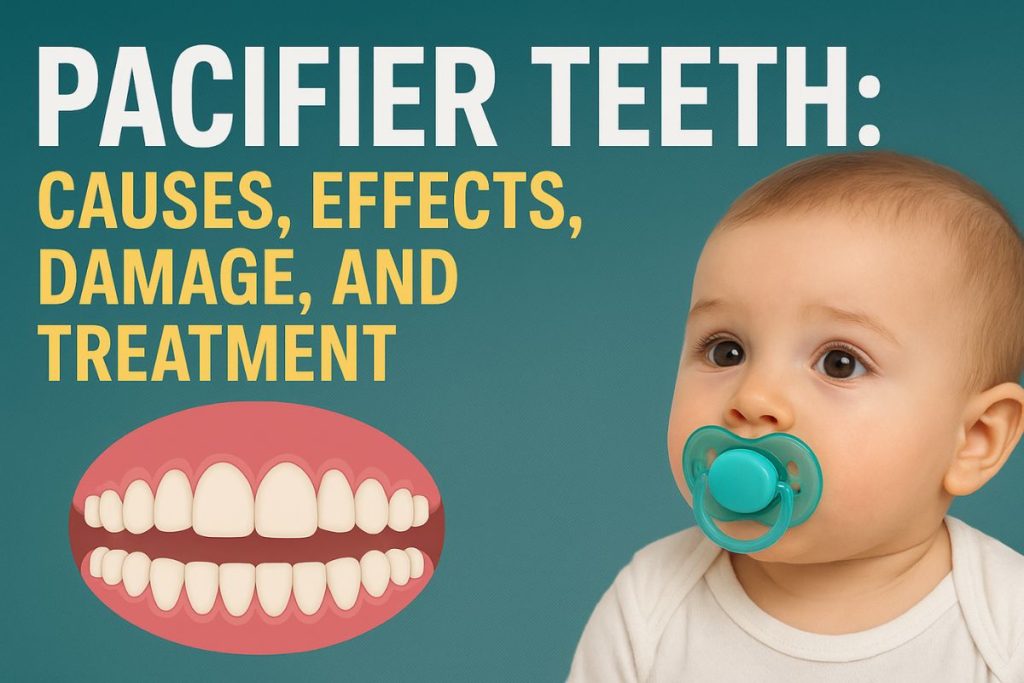
“Pacifier teeth” isn’t a formal dental term, but it’s commonly used to describe changes in a child’s bite from sucking habits. When a toddler constantly sucks on a pacifier, the front teeth and palate can be pushed out of place. Typical misalignments include:
- Open bite: A gap between the upper and lower front teeth when the mouth is closed. The teeth don’t meet properly in front.
- Crossbite: One or more upper teeth bite inside the lower teeth instead of outside. This often happens on one side of the mouth.
- Protruding (buck) teeth: The upper front teeth stick out more than normal. Over time, the top teeth can tilt forward.
- Narrow palate: Constant sucking can make the roof of the mouth (palate) more arched or constricted. A narrow palate can crowd teeth.
- Cavities and gum issues: If pacifiers are misused (e.g. dipped in honey or juice), the sugar can cause tooth decay and gum problems in baby teeth. Over time, this can add to oral damage.
These problems are more likely the longer a pacifier habit continues. For example, one study found nearly 71% of children who kept pacifiers (or thumb-sucking) past age 4 had noticeable malocclusion. By contrast, only 14% of children who quit pacifiers by age 2 showed misalignment. In practice, any bite issue seen in toddlers is often called pacifier teeth if it’s linked to sucking.
Figure: Illustration of a crawling baby with a green pacifier. These issues often start in toddlerhood. The American Academy of Pediatric Dentistry (AAPD) reports that children using pacifiers beyond 3 years had significantly more open bites than those who stopped earlier. Similarly, posterior crossbites (where the back teeth don’t align properly) are linked to pacifier use beyond infancy. In short, pacifier teeth are the observable dental shifts caused by long-term pacifier (or thumb) sucking.
Causes of Pacifier Teeth
Pacifier teeth are caused by prolonged or improper pacifier use. Key factors include:
- Duration of use: The longer a child uses a pacifier, the greater the risk. Sucking through infancy into toddlerhood is most problematic. For example, the risk of misalignment jumps if pacifier use continues past 18–24 months. A study even warns that continued pacifier use after the first birthday is associated with posterior crossbites. AAPD guidelines similarly note that pacifier use beyond age 3 raises open-bite risk, and they recommend weaning by age 3 at the latest.
- Intensity and frequency: Vigorous or constant sucking exerts more pressure. A child who continually sucks (for hours) will push on their teeth and palate more than a child who only occasionally uses a pacifier. Over time, even this light pressure can alter tooth position.
- Pacifier size and fit: A pacifier that’s too large, or a shield that’s too small, can change bite dynamics. If the nipple goes too far into the mouth, or if the child can fit the whole pacifier in their mouth, it increases choking risk and also changes how sucking force is applied. Always use the correct size for your child’s age.
- Unhealthy habits with pacifiers: Dipping pacifiers in sugary substances (honey, syrup, juice) may help pacify baby short-term, but it’s a big culprit for damage. The added sugar coats the teeth and encourages decay. In fact, pediatric experts warn that sweetened pacifiers exponentially increase cavities and gum disease risk. (As an aside, honey on pacifiers is also dangerous because of infant botulism spores.)
- Genetics and anatomy: Some children’s mouth structures are naturally more susceptible (a narrow palate, for instance). If a child also has a tongue-thrusting habit, the combination with pacifier sucking can worsen the effect.
In short, pacifier teeth don’t happen overnight; they’re the result of daily pressure on the teeth and gums. The duration of sucking is by far the biggest factor. It’s been noted that the duration of the habit matters more than frequency – a child sucking a pacifier for hours a day is at much higher risk than one who only uses it occasionally.
Effects and Damage of Pacifier Teeth
If a child does develop pacifier teeth, the effects can range from mild to significant:
- Tooth misalignment: As described, open bites and crossbites make chewing and biting uneven. In many cases, baby teeth will eventually shift back if the pacifier habit stops early. For instance, the AAPD notes that open bites from pacifiers usually improve after the habit is eliminated by age 3. However, if use continues, the bite may stay off even as permanent teeth come in, requiring orthodontic correction later.
- Appearance: Protruding front teeth (often called buck teeth) can affect a child’s smile and confidence. Parents may notice their child’s front teeth flaring outward. This is one of the most common “pacifier teeth” complaints.
- Long-term alignment: Chronic pacifier sucking can narrow the upper arch (palate), which can crowd permanent teeth later. This often leads to a need for braces to widen the arch. Posterior crossbites (back teeth misaligned) can require palatal expanders in older kids.
- Secondary issues: Severe bite problems can potentially lead to speech issues or jaw pain if untreated. For example, an open bite can make certain sounds (like “s” or “th”) harder for a toddler to say clearly.
- Dental health: Beyond alignment, any cavities caused by pacifiers (from sugars) weaken teeth. Gum recession (loss of gum tissue) around front teeth has even been observed in extreme pacifier cases.
Top 10 Dog Walker Jobs That Pay Well in 2025
Not all pacifier effects are permanent. As one source explains, “pacifier use during the first few years generally won’t cause long-term dental concerns,” but beyond that the risks grow. In fact, the Mayo Clinic advises weaning by age 2 because “research suggests harmful dental effects can start by age 2”. In summary, if a pacifier habit goes on too long, damage to the bite is possible – but early action can greatly reduce or reverse it.
Preventing Pacifier Teeth: Tips for Safe Use
You can enjoy the benefits of pacifiers while minimizing dental risk by following these expert guidelines:
- Limit the habit’s duration: Begin weaning by around 6–12 months and aim to stop completely by 2–3 years. Pediatricians often recommend stopping pacifiers by 24 months to prevent orthodontic problems. The AAPD specifically advises ending the habit by age 3. Removing the pacifier habit early gives baby teeth a chance to realign naturally.
- No sweeteners: Never dip pacifiers in juice, honey, or syrups. The American Academy of Pediatrics advises against honey or sweet coatings, as sugar dramatically increases decay (and honey also risks infant botulism). Plain is best.
- Don’t share pacifiers: Even if cousins or friends swap pacifiers “just this once,” it’s not safe. Sharing spreads germs and can introduce new bacteria into your baby’s mouth. Illness aside, extra bacteria on a pacifier can also contribute to cavities.
- Clean and inspect regularly: Wash pacifiers often and inspect them for wear. Replace them if bitten or cracked. The AAPD recommends sterilizing by boiling or using a disinfectant spray to eliminate pathogens like Staph, Candida, and Streptococcus which can colonize pacifiers.
- Choose safe designs: Use the correct pacifier size for your child’s age. Ensure the pacifier is a one-piece design (to avoid choking hazards) and has a large, firm shield with ventilation holes. According to safety guidelines, the shield should be at least 1.5 inches across so it can’t slip entirely into the mouth.
- Consider orthodontic pacifiers: If you have concerns, pick an “orthodontic” pacifier. These have a flat, collar-shaped nipple intended to align with the baby’s palate. Studies note they may reduce the likelihood of open bites compared to conventional (round) pacifiers. However, remember no pacifier can guarantee perfect teeth – the key is still when and how long it’s used.
- Balance with alternatives: Offer other soothing methods too: swaddling, cuddling, singing, or teethers. For teething babies, give them safe teething rings or chilled washcloths instead of relying solely on a pacifier. This helps gradually wean them off the pacifier habit.
By following these tips – especially weaning on schedule – most parents avoid pacifier teeth altogether. In fact, many pediatric dentists say you shouldn’t be afraid to use pacifiers during infancy (they help with sleep and SIDS prevention) as long as you practice good hygiene and stop at the right age.
Pacifiers and Teething Relief
Pacifiers can actually help soothe teething pain. Here’s how to use them safely for teething:
- Soothing pressure: Sucking on a pacifier applies gentle pressure to painful gums, which babies find comforting. Pediatricians agree that pacifiers can calm a fussy teething infant.
- Chilled pacifiers: Many pacifiers are designed to be frozen (without any freezing harmful substances). A chilled teething pacifier can provide a cooling effect. For example, Philips Avent recommends popping a pacifier in the fridge before giving it to baby; the cool silicone eases gum pain.
- Teething pacifiers: Some brands make two-in-one teether-pacifiers. These have a regular nipple on one side and a textured gum massager or ring on the other. These let babies chew safely.
- Avoid harmful additives: Still, avoid putting anything toxic or allergenic (like honey or alcohol) in or on a pacifier. Stick to water if you chill it.
Overall, do pacifiers help with teething? Yes, they can be part of your teething toolbox. They’re not a cure, but they do give babies something to chew on. Just remember to keep them clean and monitor usage. For extra relief, try a teether pacifier — basically a pacifier combined with a safe teething toy (made of soft, BPA-free silicone). These products exist precisely to comfort teething babies while addressing some safety concerns of normal pacifiers.
Best Pacifier Practices for Healthy Teeth
Choosing the right pacifier and using it correctly can protect your child’s oral health:
- Material matters: Use food-grade silicone pacifiers. They are durable and hygienic. Philips Avent notes silicone pacifiers are among the safest for baby teeth. Avoid cheap, non-branded pacifiers of unknown material.
- One-piece design: As noted, one solid piece with no detachable parts is safest. This avoids choking hazards.
- Shield size and shape: Ensure the pacifier has a large, sturdy shield with ventilation holes. This prevents swallowing and allows airflow. A good grip on the shield means fewer bites on the nipple (which could break it).
- Orthodontic shape: Orthodontic pacifiers have a flattened nipple that’s wider at the base. Some parents find these keep the jaw more relaxed. Studies show they induce slightly less front-tooth flaring than round pacifiers. If you want peace of mind, use one, but remember it’s not foolproof.
- Age-appropriate: Many brands label pacifiers by age (0–6 months, 6–18, etc.). Follow these guidelines. A pacifier that’s too big can be a choking risk; too small might fit entirely in the mouth.
- Avoid “sweet pacifiers”: Sometimes pacifiers come with gel you can insert and freeze. While fun, be cautious: if the pacifier splits, that gel could leak. Only use stable designs from trusted brands.
In summary, the best pacifier for teeth is one that is safe, well-sized, and used for a limited time. Even the ideal pacifier must eventually go. Remember: the ideal practice is not relying on a pacifier indefinitely, regardless of brand.
When to Wean Off and How to Fix Pacifier Teeth
To protect your child’s smile, follow these guidelines on timing and correction:
- Wean by toddler age: Begin cutting back on pacifier use after 6 months (to help prevent ear infections) and aim to fully stop by about 2–3 years old. The Mayo Clinic explicitly advises starting to wean before age 2, since “harmful dental effects can start by age 2”. The American Academy of Pediatrics similarly notes that pacifier benefits (like reduced SIDS) taper off after infancy, while the dental risks grow as the child gets older. In practice, by a child’s 2nd or 3rd birthday, pacifiers should be very limited or gone.
- Phased approach: Take it step by step—first limit to nap/night only, then bedtime only, then eliminate. Congratulate your toddler on pacifier-free days. Some parents use positive rewards (stickers, extra storytime) to make weaning smoother.
- Cavity prevention: If weaning is hard, at least avoid continuous daytime use. Always inspect that pacifier: discard it if old or cracked. Keep offering water or a sippy cup after 12 months instead of juice in a pacifier.
- Treatment if issues appear: If your child already has signs of pacifier teeth, don’t panic. First, stop the pacifier habit. In many cases, this is enough. Pediatric dentists report that bite problems from pacifiers often improve within months once the pacifier is eliminated.
- Under age 2: Most alignment issues self-correct. For example, children who stopped sucking by age 2 had only a 14% rate of malocclusion – meaning most had normal bites again.
- After age 3–4: More active help may be needed. Your dentist or orthodontist can track teeth development. Some toddlers may get simple appliances (like a small plate) to guide bite growth. By the time permanent teeth come in, braces or expanders can fix remaining issues. The key is that early weaning often makes any future treatment easier.
- Will pacifier teeth correct themselves? In many cases yes, especially if caught early. As noted, dentists say that bite changes from pacifiers usually resolve if the habit stops before permanent teeth arrive. However, if a child is much older when they finally stop, there’s less natural growth left, so orthodontic intervention is more likely.
- Consult a professional: If you notice misaligned baby teeth or persistent gaps, it’s wise to get an evaluation. The dentist may take X-rays or models of the bite. They can rule out other causes and guide you on timelines for correction.
In essence, the cure for pacifier teeth is mostly preventive. The earlier the pacifier is phased out, the easier it is to avoid lasting damage. If problems do occur, orthodontic solutions are well-established. Starting the wean early is much simpler than fixing a habit or a bite later on.
FAQs
Q: Do pacifiers help with teething?
A: Yes. Sucking on a pacifier provides comfort to a teething baby by applying gentle pressure to sore gums. Special teething pacifiers (often made of soft silicone) are sold for this purpose. For extra relief, you can chill a pacifier in the refrigerator (not the freezer) before giving it to baby. This cold pacifier soothes inflamed gums. Just be sure the pacifier is clean and free of any rattling or holes where bacteria could grow.
Q: Do pacifiers ruin teeth?
A: Not necessarily ruin, but they can cause problems if misused. In moderation (limited to early infancy), pacifiers won’t permanently damage a child’s teeth. However, if a child keeps sucking beyond infancy, alignment issues can occur. Pediatric dentists say extended use can lead to gaps or crooked baby teeth, and possibly impact permanent teeth later. The key is stopping at the recommended age. Early weaning usually prevents any permanent harm.
Q: Can a pacifier mess up teeth?
A: Yes – if used too long. A pacifier exerts pressure on a child’s mouth, so over months and years it can “mess up” the bite. Open bites and crossbites are common examples of such effects. Again, the amount of effect depends on age and duration. Stopping the pacifier in the toddler years often allows the teeth to straighten back out as the child grows.
Q: Does pacifier use affect teeth?
A: It can. Dental experts note that up to about age 2, most pacifier effects are mild or temporary. But after 2, the risks grow. For instance, Mayo Clinic notes that “harmful dental effects” from pacifiers often begin by age 2. Using a pacifier beyond 3 years old significantly increases the odds of dental misalignment. So yes, pacifiers do affect teeth if the habit persists. The bright side is that these effects are generally preventable or treatable.
Q: Will pacifier teeth correct themselves?
A: Often, yes – especially if caught early. Pediatric dentists report that many issues will resolve on their own if the pacifier habit stops by age 3. For example, an open bite caused by pacifier use will usually improve within a year after quitting the pacifier. The catch is that the child must have enough growth left. If the habit continues past age 4, then natural correction is less likely and orthodontic treatment may be needed.
Q: What is the best pacifier for a baby’s teeth?
A: Look for a silicone orthodontic pacifier in the right size. Silicone is durable and safe for babies. Orthodontic shapes (flattened nipple) help keep the jaw aligned. Make sure it’s a one-piece pacifier with a large shield (≥1.5 inches) and ventilation holes. Brands like Philips Avent recommend food-grade silicone pacifiers for safety. Above all, even the best pacifier should be used only briefly – the “best” practice is to wean at the recommended age.
Q: What should I do if my toddler has pacifier teeth?
A: First, stop the pacifier immediately. In most cases, just ending the habit allows the teeth to move back. If your child is under 2, there’s a high chance the bite will correct naturally. For older kids, schedule a dental check-up. The dentist may monitor growth or suggest an orthodontic appliance to guide the teeth. In the long term, braces can fix many bite issues if needed. Early cessation of the pacifier habit always improves outcomes.
Q: Do pacifiers and teeth get along?
A: They can, when used wisely. Pacifiers have real benefits (comfort, better sleep, lower SIDS) as long as they’re age-appropriate and not overused. The key is to follow pediatric guidelines: use a safe pacifier, practice good hygiene, and plan to wean by toddlerhood. This way, pacifiers serve their purpose without “messing up” your child’s dental development.
Conclusion
Pacifier teeth are a preventable consequence of extended pacifier use. By understanding the causes (prolonged sucking, sugary habits) and recognizing the effects (open bites, misaligned teeth), parents can take action before serious damage occurs. The strategies are clear: use pacifiers wisely (clean and safely), start weaning by age 2, and consult your dentist if you see bite changes. Most pacifier-related alignment issues will correct themselves once the habit stops. Above all, balance is key – pacifiers offer comfort and safety benefits in infancy, but only when eventually phased out. By following current guidance, you can safeguard your child’s smile while still enjoying the benefits of a pacifier during the appropriate early years.
Have experience with pacifiers and teething? Share your tips below and pass this article to other parents who might find it helpful!
