
Magnesium lotion is a topical skincare product that delivers magnesium through the skin. Many people use it to supplement diet because magnesium is vital for 300+ biochemical reactions in the body. It helps regulate muscles, nerves, sleep, and stress, yet studies show widespread deficiency – e.g. one in five Americans gets less than half the recommended daily magnesium.
Magnesium lotion (a lotion with magnesium chloride) offers a convenient, non-greasy way to replenish magnesium levels. When applied, the mineral absorbs through the skin’s tiny openings, bypassing the digestive tract. This transdermal route can avoid stomach upset common with oral supplements. In this article we cover what magnesium lotion is, how it works, its many benefits (sleep aid, muscle relief, skin hydration, etc.), DIY recipes, safety, and FAQs.
What Is Magnesium Lotion?
Magnesium lotion is a moisturizing cream or gel that contains magnesium chloride (often sourced from Zechstein salt) dissolved in water or oil. Unlike magnesium oils or Epsom salt baths, lotions are mixed with natural emollients like coconut oil and shea butter for easy application. For example, Life-Flo’s Magnesium Lotion uses pure Zechstein magnesium chloride blended with coconut and shea oils for a creamy, fast-absorbing formula. Ancient Minerals’ magnesium lotion is similarly formulated as a “smooth, quickly absorbed emulsion of magnesium chloride in a skin-nourishing base of certified organic oils”. By rubbing on clean skin (often on arms, legs, back or feet), you deliver magnesium ions directly to sore or tense areas. The lotion leaves no oily residue and provides hydration while it works.
Magnesium lotion works by transdermal absorption: the skin’s pores and sweat glands allow minerals to penetrate into underlying tissues. Early research indicates that applied magnesium can appear in blood and urine – one study showed applying 56 mg/day of magnesium to the skin raised blood magnesium levels. However, absorption can vary by skin site (e.g. legs and arms are good spots) and lotion formulation. In practice, many users report feeling the effects within minutes to hours (e.g. muscle relaxation). Applying lotion right after exercise or before bed is common – this targets muscles and the nervous system for maximum benefit.
How Magnesium Lotion Works
Topical magnesium lotion provides magnesium in a form your body can use immediately. Unlike oral supplements, it does not rely on stomach absorption, so it avoids GI side effects such as nausea or diarrhea. This can be a major advantage: the UK’s National Health Service notes that doses above 400 mg of magnesium (taken by mouth) often cause diarrhea, but this is not a concern with skin application. Instead, magnesium lotion delivers the mineral directly to muscles and nerves under the skin. Users often massage it onto areas of tension (neck, shoulders, calves, etc.) for quick relief.
Besides magnesium itself, many lotions include soothing ingredients. For instance, Life-Flo and Ancient Minerals add natural oils and butter (coconut oil, shea butter) for deep hydration. Lavender or chamomile may be added to promote relaxation (not shown in Life-Flo’s unscented formula, but common in “sleep” lotions). The result is a dual action: transdermal magnesium uptake plus skin nourishment. Regular use can help maintain healthy magnesium levels in cells without swallowing pills. Studies highlight that magnesium is crucial for heart and nerve function, bone strength, and more, so keeping stores topped up is important.
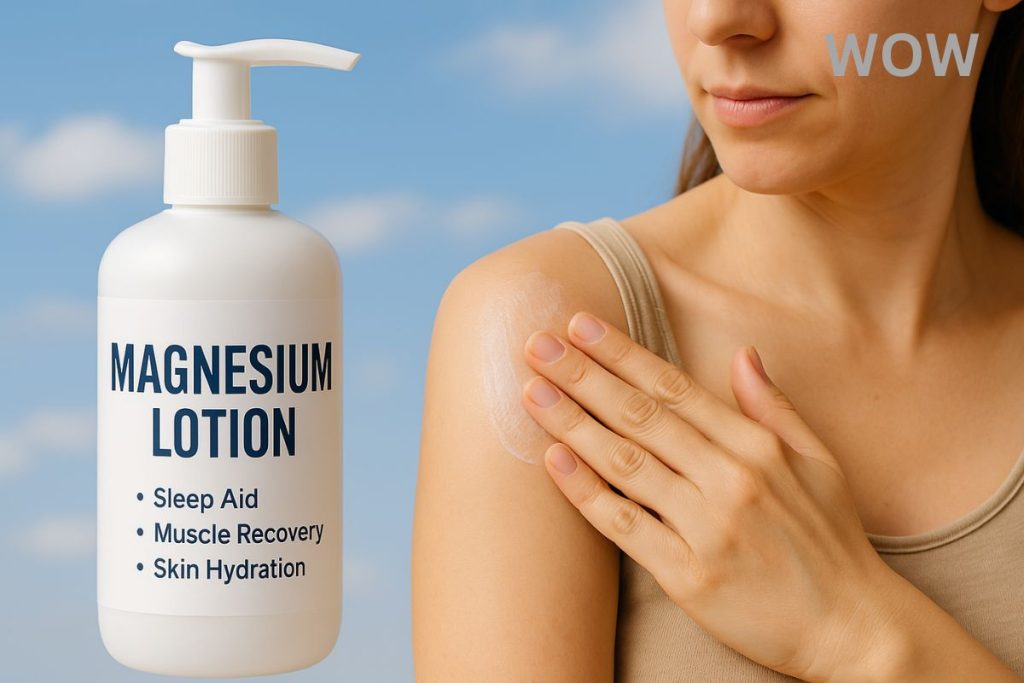
Woman applying magnesium lotion to her shoulder for muscle relaxation. Magnesium lotion is often applied to sore muscles after exercise or at bedtime to help them recover faster. Its quick absorption and moisturizing formula delivers magnesium ions where they’re needed.
Key Benefits of Magnesium Lotion
Magnesium lotion offers a wide range of health and wellness benefits. Below are some of the top advantages supported by research and user reports:
- Supports Restful Sleep: Magnesium interacts with neurotransmitters like GABA and melatonin to regulate the sleep cycle. Topical magnesium may help you fall asleep faster and sleep more soundly. (It works without morning grogginess that some sleeping pills cause.) For example, Earthley’s Good Night Lotion is marketed to “promote normal sleep cycles” so babies (and parents) stay asleep longer.
- Eases Muscle and Joint Aches: Low magnesium is linked to muscle cramps and soreness. Applying magnesium lotion can help relax tight muscles and relieve minor aches. Athletes often use it post-workout, and moms use it for postpartum body relief.
- Reduces Stress and Promotes Relaxation: Magnesium helps regulate cortisol (the “stress hormone”) and promotes calming neurotransmitters. Rubbing on magnesium lotion in a quiet moment can help unwind the nervous system. Many users report feeling a sense of calm and reduced anxiety after application.
- Boosts Skin Health and Hydration: Magnesium contributes to skin barrier function. Research shows magnesium can improve skin hydration and reduce inflammation. Regular use of a magnesium lotion keeps skin soft and supple. In fact, one trial found a magnesium-containing cream helped clear baby diaper rash faster than a standard cream. Moisturizing oils (shea butter, apricot kernel oil) in high-quality lotions also soothe dry, irritated skin.
- Supports Energy and Mood: Although less discussed, magnesium is key in energy production. Some women find that using magnesium lotion helps combat fatigue (especially during menstruation or postpartum). It also supports hormonal balance and bone health over time, since magnesium is needed for calcium absorption and hormone regulation.
Overall, magnesium lotion’s combination of mineral therapy and skincare makes it a “quiet hero” for daily wellness. Consistent use can contribute to overall health by addressing common deficiencies (many diets fall short of the 300 mg daily RDA).
Magnesium Lotion for Sleep and Relaxation
Many people use magnesium lotion as a sleep aid or evening relaxant. Topical magnesium helps calm the nervous system and prepare the body for rest. Studies suggest magnesium can increase melatonin (the sleep hormone) and lower cortisol, so applying lotion before bed may improve sleep quality. Unlike taking a supplement, lotion works quickly and bypasses digestion. Users often massage it on their feet, legs, or lower back a few minutes before bedtime.
For infants and children, a gentle magnesium lotion can even improve baby sleep cycles. Earthley’s “Good Night Lotion” contains magnesium chloride and calming lavender; it’s claimed to make babies sleep longer with fewer night wakings. Likewise, brands like 8 Sheep Organics offer magnesium lotion formulas specifically for kids. If you struggle with insomnia, restless legs, or general nighttime anxiety, magnesium lotion may be worth trying as part of a bedtime routine. Just apply a small amount before lights-out and see how you (and your kids) feel in the morning!
Magnesium Lotion for Muscle & Joint Relief
Athletes and anyone with sore or overworked muscles can benefit from magnesium lotion. It’s commonly applied to tense areas (shoulders, calves, neck) or joints after exercise, gardening, or a long day on your feet. Magnesium ions help muscles relax and reduce cramping. For example, Life-Flo’s Magnesium Lotion is specifically “designed to help soothe overused muscles and joints”. Users massage it in, which also increases local blood flow.
Because magnesium lotion also contains skin-softening oils, it provides immediate comfort. A good formula “replenishes dry skin” while the mineral goes to work. Over time, routine use can ease chronic aches. Some people even combine it with physical therapy or massages as a natural alternative to pain medications. If you have a specific joint pain or muscle strain, try applying a liberal amount of magnesium lotion and covering with a warm cloth for added relaxation.
Magnesium Lotion for Stress Relief
Beyond physical aches, magnesium lotion can ease mental stress. Magnesium is known to affect the HPA axis and reduce cortisol levels. In practice, slathering on lotion during tense moments can signal to the body to unwind. A few deep-breathing strokes with magnesium lotion can help defuse anxiety. Stork Helpers (a parenting blog) even lists stress reduction as a key benefit.
Use magnesium lotion as part of a self-care ritual: after a stressful day at work, apply it to your temples, neck, and arms. The act of massaging also increases relaxation. Over time, regular use may improve your overall resilience to everyday stressors. Unlike oral relaxants, magnesium lotion gives a similar calming effect without sedation – so you feel relaxed and alert, not drowsy.
Magnesium Lotion for Skin Care
Magnesium lotions can be part of a skincare routine too. In addition to boosting hydration, magnesium has anti-inflammatory properties. People with mild eczema, psoriasis, or acne sometimes find that improving their magnesium status helps skin healing. For instance, research found a magnesium-ceramide cream to be as effective as a mild steroid cream in treating atopic dermatitis. While these results were with a specific formulation, it highlights magnesium’s skin benefits.
Even on healthy skin, applying magnesium lotion can help lock in moisture. The mineral helps reinforce the skin barrier, reducing transepidermal water loss. This means lotion can make your skin feel softer and less irritated. If you have stubborn dry patches or seasonal rashes, try gently massaging magnesium lotion into the affected area twice daily. Remember to choose products with soothing ingredients like aloe or chamomile if you have very sensitive skin.
Who Can Use Magnesium Lotion?
Magnesium lotion is generally safe for most people, including children, pregnant women, and sensitive skin types – though you should always patch-test first. Many brands emphasize mild formulas. For example, Earthley’s Good Night Lotion is safe for the whole family, from newborns to adults, including nursing and pregnant mamas. This product is even recommended for infants and has a “sensitive” version without essential oils.
Kids and Babies: Gentle magnesium lotions for kids are available (often labeled for children). These can help with growing pains or bedtime restlessness. In one clinical trial, a 2% magnesium cream significantly sped up healing of infant diaper rash, suggesting it’s both safe and soothing for delicate skin. (After cream usage, treated infants recovered ~1.5 days faster than controls.) Parents report using small amounts on restless legs or tummy after baths. Just avoid any broken skin, and look for unscented options for babies. If baby skin is very reactive, test first on one small area.
Pregnancy: Pregnant women often face leg cramps and insomnia. While most evidence comes from oral supplements, many find relief using topical magnesium safely. Again, Earthley notes their lotion is safe in pregnancy. Magnesium may ease pregnancy-related leg cramps (studies on oral magnesium are mixed) and help relax tired muscles. Pregnant women using magnesium lotion have reported better sleep and less stiffness, but always consult your doctor before starting any new regimen. (Topical use avoids the laxative effect that high-dose pills can have on pregnant stomachs.)
Everyone Else: Athletes, active seniors, or anyone with magnesium deficiency symptoms can use lotion too. It’s also a great option for those who dislike swallowing pills. Because it’s topical, absorption is gentle and gradual – similar to applying a muscle rub. No one (except those with a magnesium allergy, which is extremely rare) needs a prescription for magnesium lotion. However, if you have kidney problems or take medications, ask a healthcare provider for advice.
How to Make Your Own Magnesium Lotion (DIY Recipe)
Many people enjoy making DIY magnesium lotion at home. A simple homemade formula requires just a few natural ingredients:
- Magnesium Chloride Flakes: The active ingredient (1/2 cup in a basic recipe).
- Water: Dissolve flakes in 3 tablespoons boiling water.
- Coconut Oil: Unrefined virgin coconut oil (¼ cup, solid at room temperature).
- Beeswax: Helps harden the lotion (about 2 Tbsp pastilles).
- Shea Butter: Adds creaminess and moisture (about 3 Tbsp).
To make it, melt the coconut oil, beeswax, and shea butter together. Separately, dissolve magnesium flakes in hot water (stir to make a clear solution). Then slowly pour the magnesium solution into the oil mixture while stirring constantly. Let it cool and whip with a hand mixer until creamy (about 10 minutes). You’ll get a light, whipped lotion. Some people add a few drops of essential oil (lavender or lemon) for scent. Store in a clean jar and use within a month (since there are no preservatives).
According to one DIY blogger, this “4-ingredient magnesium lotion” has helped her restless legs, sleep quality, and even anxiety. Magnesium flakes should be the chloride form (other forms like Epsom salt work differently). Adjust the recipe proportions to your liking: more beeswax makes it firmer, more oils makes it softer. DIY lotions are cost-effective – a large bag of magnesium flakes makes dozens of lotion jars. Just be sure to follow a tested recipe and label your creation clearly. (Always do a patch test on your skin first!)
Tip: You can also buy “magnesium gel” or “magnesium oil” concentrate and blend it into lotion or aloe gel as a shortcut to DIY. But homemade lotions let you control texture and purity.
Choosing the Best Magnesium Lotion
When picking a ready-made magnesium lotion, consider your goals and skin type. Look for a product with high-quality magnesium chloride (Zechstein-sourced is considered very pure) and good moisturizers (like natural oils, aloe, or glycerin). Avoid fillers, artificial fragrances, or dyes. For muscle relief, unscented or minty formulas are common; for sleep, choose a lotion with relaxing scents (lavender, chamomile).
Popular brands include:
- Life-Flo Magnesium Lotion – An unscented body lotion with Zechstein magnesium chloride, known for soothing tired muscles and skin. Users praise its light, non-greasy feel.
- Ancient Minerals Magnesium Lotion – A highly concentrated lotion that delivers magnesium while hydrating the skin. It’s fragrance-free and ideal for daily use.
- Earthley Good Night Lotion – A family-friendly lotion with magnesium chloride and lavender. It’s safe for babies and pregnant moms and marketed specifically for sleep support.
- 8 Sheep Organics Magnesium Lotion – An organic lotion formulated for kids (mild and hypoallergenic) and adults.
- Trace Minerals Magnesium Moisturizing Lotion – Available in an 8 fl. oz size, this lotion is designed to increase cellular magnesium and mentions benefits for cramps, stress, and sleep.
The “best” lotion is one you’ll use regularly. Read reviews and ingredient lists. If you have sensitive skin, choose “sensitive” formulas or perform a 24-hour patch test. Some users prefer all-natural brands with minimal ingredients, while others focus on potency. Price can range from $10 to $25 per bottle. Since the FDA doesn’t evaluate cosmetics claims, look for brands that provide third-party testing or clear sourcing information.
Potential Side Effects and Safety
Magnesium lotion is gentle for most users, but be aware of a few precautions:
- Mild Skin Irritation: The most common side effects are skin redness, itchiness or dryness. This usually happens on first use or if skin is very dry. To avoid irritation, start with a small amount on one area and wait 24 hours. If no reaction, you’re likely fine to use more. Using too much magnesium at once can also lead to temporary loose stools; this is because excess magnesium that isn’t absorbed through skin can be eliminated.
- Dryness from Ingredients: Some lotions (especially those without extra moisturizers) can leave skin a bit dry. Look for products containing shea butter, aloe, or ceramides for added hydration. You can always follow up with a regular moisturizer after magnesium lotion if needed.
- Varying Tingle or Warmth: A mild tingling sensation can occur as the mineral enters the skin; this is usually harmless and fades quickly. If the feel is very uncomfortable or burning persists, wash it off and try a more diluted application next time.
- Interactions and Overuse: Because it’s topical, magnesium lotion has very low risk of interacting with other drugs. However, if you have kidney disease or severe health issues, consult a doctor before use. Also, don’t apply on wounds or severely broken skin (unless directed by a medical professional) – the area may absorb too much magnesium and cause irritation.
A benefit of magnesium lotion is that it avoids digestive upset. Studies note that unlike oral magnesium, transdermal application “does not cause the usual gastrointestinal discomfort”. So people who get cramps or diarrhea from pills can often tolerate the lotion easily. Just remember: even too much oral magnesium is generally harmless aside from laxative effect. Topical overuse is unlikely to cause serious issues either – Earthley notes that using excess Good Night Lotion may cause only temporary diarrhea.
Engaging With Magnesium Lotion
If you’re considering magnesium lotion, here are some tips to boost its effectiveness:
- Regular Use: Apply daily or nightly for best results. Magnesium levels build up over time, so consistency is key.
- Massage In: Gently rub it into skin with circular motions. Massaging improves absorption and boosts relaxation.
- Warm It: For better absorption, apply after a warm shower or wrap treated area in a warm towel.
- Combine with Routines: Use it as part of your bedtime routine (apply before reading/meditating) or after workouts to condition your body to expect relaxation.
- Monitor Effects: Keep a wellness journal. Note if sleep quality improves, or if your muscle cramps lessen over days/weeks of use. Personal tracking helps you fine-tune how you use the lotion.
If you have questions or experiences, share them below! Readers often find community tips helpful (e.g. “I used magnesium lotion on my calves after my morning run and slept better” or “my toddler loves the lavender scent”). Your comment could spark engagement and help others learn from real-life use.
Conclusion
Magnesium lotion is a simple, science-backed way to deliver this essential mineral through the skin. By applying magnesium lotion regularly, you can tap into benefits like improved sleep, reduced muscle cramps, lower stress, and softer skin. It’s generally safe for adults and children alike, with minimal side effects. Whether you buy a ready-made brand or make your own DIY lotion, the key is consistency. Try incorporating magnesium lotion into your nightly or post-workout routine and see how your body responds. For anyone looking to boost magnesium without pills, magnesium lotion offers genuine value and relief.
FAQ
Q: What are the benefits of using magnesium lotion? Magnesium lotion can improve sleep quality, relax tense muscles, reduce stress, and enhance skin hydration. It provides magnesium topically, which helps soothe sore muscles and joints, calm the nervous system, and support healthy skin barrier. Many users also find it helps with restless legs, cramps, and overall relaxation.
Q: Does magnesium lotion help you sleep? Yes – many people report better sleep after using magnesium lotion before bed. Magnesium influences melatonin and GABA, promoting relaxation. Applying it 10–15 minutes before sleep (e.g., to legs or arms) can help ease the body and mind into rest, without the groggy feeling of pills. For babies and kids, gentle “sleep” formulas are available that contain soothing oils and magnesium to help longer sleep cycles.
Q: Is magnesium lotion safe for babies and kids? Generally, yes. Kid-friendly magnesium lotions are formulated for sensitive skin. Research even shows a low-dose magnesium cream sped up healing of diaper rash in infants. Brands like Earthley explicitly state their lotion is safe for newborns, kids, and pregnant/nursing mothers. Still, start with a small test on baby’s leg or belly before full use. If your child has extremely dry or eczema-prone skin, monitor for any irritation.
Q: What are the side effects of magnesium lotion? Side effects are typically mild. The most common are temporary skin redness or itchiness on first use. These usually subside quickly. If too much is applied, it might cause loose stools (the body flushes excess magnesium), but this is rare. Always apply on intact skin and avoid broken areas. To minimize dryness, choose lotions with moisturizing ingredients (e.g. shea butter or ceramides).
Q: How do I make DIY magnesium lotion? A basic recipe involves dissolving magnesium chloride flakes in hot water and whipping it together with melted coconut oil, beeswax, and shea butter. For example, mix ½ cup magnesium flakes in 3 Tbsp boiling water, then blend with ~¼ cup coconut oil, 2 Tbsp beeswax pastilles, and 3 Tbsp shea butter. Stir or whip until creamy. Let cool, then jar it. (See detailed DIY guide for tips.) Always ensure ingredients are pure and do a patch test.
Q: Which magnesium lotion is best for me? Look for a trusted brand with high-purity magnesium chloride and soothing oils. For muscle relief, unscented Zechstein-based lotions like Life-Flo’s are excellent. For sleep and kids, Earthley’s Good Night or 8 Sheep Organics are popular. Ancient Minerals offers an extra-concentrated lotion for serious users. Read labels to match your need (e.g. “for sleep”, “for sports”, “for sensitive skin”). Ultimately, “best” depends on your budget, scent preference, and how your skin reacts.
