
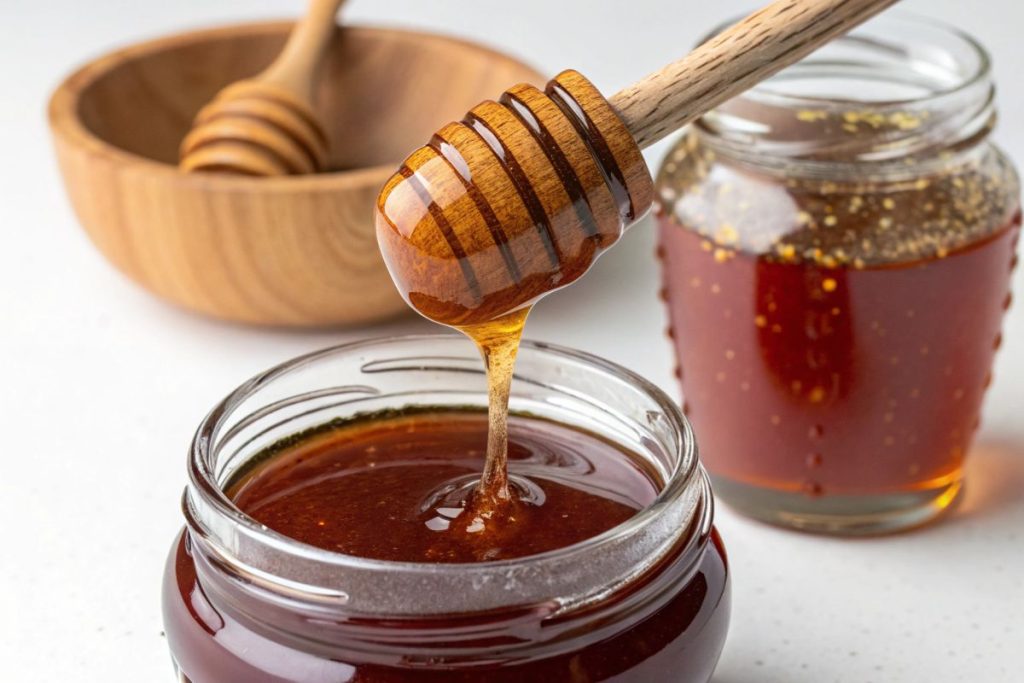
Buckwheat honey in a jar. Buckwheat honey is a dark, nutrient-rich honey made by bees from the nectar of buckwheat flowers. Unlike light-colored honeys, it has a bold, molasses-like flavor and a deep brown or nearly black color. It’s prized for being higher in antioxidants and beneficial phytochemicals than common honey. In this article, we’ll explore what it is, its unique properties and taste, its many health benefits, practical uses, and where to find the best raw buckwheat honey.
What Is Buckwheat Honey?
Buckwheat honey is a monofloral honey produced when bees forage primarily on the blossoms of the buckwheat plant (a pseudo-cereal, not a true grain). Because buckwheat blooms are small and produce less nectar, it takes a lot of effort for bees to collect enough. The result is a thicker, darker honey with a characteristic strong taste. Healthline notes that it “is a highly nutritious honey” thanks to these dense nutrients. Buckwheat flowers are dark-colored, which explains why the honey itself ranges from dark purple-black to a reddish-brown amber.
It stands out from other varieties due to its exceptional nutrient profile and medicinal qualities. Scientific analyses confirm it has “a very high nutritional value with beneficial antioxidant and anti-inflammatory effects”. In fact, studies show it contains more minerals, sugars, and phenolic compounds (antioxidants) than many other honeys. These rich polyphenols – plant-based antioxidants – give buckwheat honey its potent health properties.
Health Benefits
Buckwheat honey’s health benefits are well documented. Clinical studies and nutrition experts agree it can:
- Boost antioxidants: Buckwheat honey is loaded with antioxidants. One study found that drinking it in tea significantly increased the body’s antioxidant levels. In laboratory tests, it ranked among the highest-honey in total antioxidant capacity. These antioxidants (like flavonoids and phenolic acids) help neutralize harmful free radicals, protecting cells and reducing oxidative stress.
- Support healing & immunity: Its antioxidants and nutrients promote overall healing and immune function. According to Healthline, buckwheat honey “promotes healing in the body, supports immune function, and boosts antioxidants”. Its immune-boosting effect makes it a popular home remedy during cold and flu season. Its anti-inflammatory properties (also noted in research) may help reduce swelling and throat irritation.
- Soothe coughs and sore throats: It has been shown to calm coughs effectively. In one pediatric study, children with nighttime coughs who took buckwheat honey slept better than those given OTC cough syrup or nothing. The sweetness and thickness coat the throat, while its antiviral/antibacterial compounds work to suppress cough reflexes.
- Wound care: Like other honeys, it has antibacterial and healing properties for skin. It can be applied topically to minor cuts and burns; its high sugar content draws fluid out of wounds and its low pH inhibits microbial growth. Research on honey-based wound care suggests it can promote faster healing and prevent infections.
- Lower cholesterol & heart health: Early research suggests it may have cardiovascular benefits. In one study, regular consumption was linked to reduced blood cholesterol levels. The antioxidants in it also support heart health by reducing oxidative damage to arteries. (Of course, it’s still a sweetener – use in moderation – but it may be a heart-healthier choice than refined sugar.)
- Skin health: Buckwheat honey is rich in nutrients that nourish skin. Its antibacterial, anti-inflammatory and moisturizing effects can help improve skin appearance and combat acne or blemishes. Some people use it as a facial mask ingredient or natural skincare remedy.
Summary of Health Benefits
- Rich in antioxidants & nutrients: Protects cells
- Immune & anti-inflammatory support: Promotes healing, reduces inflammation
- Cough & cold relief: Calms sore throats and coughs more effectively than many cough syrups
- Antibacterial & wound healing: Used topically to help heal and disinfect wounds
- Heart & cholesterol support: May help lower cholesterol and support cardiovascular health
How to Use it
Buckwheat honey can be enjoyed in many ways. Its strong, robust flavor means a little goes a long way. Here are some popular uses:
- Natural sweetener: Drizzle buckwheat honey on pancakes, oatmeal, yogurt, or toast instead of sugar. It also sweetens beverages – stir a spoonful into tea, coffee, or smoothies. Because it’s stronger and less sweet than clover honey, it pairs well with bold flavors (e.g. ginger tea, dark breads, berry desserts).
- Sore throat remedy: Take a spoonful of buckwheat honey straight up, or dissolve it in a warm herbal tea with lemon. The American Academy of Family Physicians recommends honey for children’s nighttime coughs (e.g. 2.5–10 mL depending on age). Adults can also use it to soothe sore throats.
- Cooking and baking: Use it as an all-natural sweetener in recipes. It’s great in marinades, glazes, and breads (especially buckwheat pancake mix or quick breads). Its deep flavor can add complexity to barbecue sauces or salad dressings.
- Wound care: Apply raw buckwheat honey directly to minor cuts, scrapes, or burns and cover with a bandage. Its antimicrobial nature helps clean the wound and promote healing. (Always use medical-grade honey for serious wounds and consult a doctor if needed.)
- Skincare mask: Make a DIY face mask by mixing it with a bit of coconut oil or yogurt. Leave it on for 10–15 minutes before rinsing. The honey’s moisturizing and antibacterial properties can help soften and clear skin.
- Daily supplement: Some people take a spoonful of raw buckwheat honey daily for general wellness. It can boost energy and immunity over time. (Reminder: Honey should not be given to infants under 1 year old due to infant botulism risk.)
In summary, buckwheat honey can be used much like any honey – as a sweetener, remedy, or topical treatment – but its unique taste and nutrient profile mean it shines in natural health applications.
Top 10 Dog Walker Jobs That Pay Well in 2025
Buckwheat Honey vs. Manuka Honey
These two dark, specialty honeys are often compared for their wellness qualities, yet they differ in several notable ways.
- Source: One is produced from buckwheat blossoms commonly found in North America and Europe, while the other originates from the Manuka plant, native to New Zealand and parts of Australia.
- Flavor & color: The first variety ranges from dark brown to nearly black with a bold, molasses-like taste. The second typically varies from dark cream to brown, offering a strong, earthy flavor profile.
- Antioxidant content: The buckwheat-based option is generally richer in polyphenols, giving it a slight edge in free-radical-fighting power. Both are loaded with antioxidants, but lab results often show this one leading in overall antioxidant levels.
- Antibacterial potency: The New Zealand variety is prized for its high methylglyoxal (MGO) concentration, delivering exceptional antibacterial strength. The buckwheat version also performs well in antibacterial tests, but the Manuka type is considered the “gold standard” for wound healing, backed by standardized grading systems like UMF and MGO.
- Price and availability: The Manuka option usually comes with a steeper price tag and is harder to source, while the buckwheat type is more budget-friendly and widely available.
- Key benefits: Both boost immunity, aid digestion, and support wound healing. Manuka shines in infection control and oral health, whereas the buckwheat version excels as an antioxidant-rich immune booster.
In short, the choice comes down to purpose and budget. For daily antioxidant intake and cough relief, the buckwheat-based variety is an excellent pick. For targeted antibacterial care—such as deep wound treatment—the Manuka option is hard to beat.
As one health review puts it: “Both are nutritional powerhouses, but the first typically offers more antioxidants, while the second carries unmatched antibacterial potency.”
Flavor, Color and Texture
Buckwheat honey is very different from light honeys. It’s usually thick and dark brown or black in appearance (sometimes with a reddish tint). The taste is strong, earthy, and malty – often described as molasses-like. Some people find it almost pungent, while others appreciate the robust depth (it can stand up to bold flavors like coffee or stout beer).
Because of its intensity, start with smaller amounts when cooking or eating it. Its texture is usually more viscous than runny honey, owing to higher mineral content. These characteristics (color, taste, thickness) signal its rich antioxidant compounds.
If you’ve never had it, think of buckwheat honey as the “black coffee” of honeys – much bolder than a clover or wildflower variety. It pairs especially well with whole grains and dark breads (try it on buckwheat pancakes or rye toast) and with strong teas.
Slice of bread drizzled with raw buckwheat honey. This dark buckwheat honey has a dense, molasses-like flavor that complements hearty breads.
Raw vs. Processed Buckwheat Honey
When shopping, you’ll encounter raw (unpasteurized) and processed buckwheat honey. Raw honey is only strained (removing bee bits), but not heated. This preserves its enzymes, pollen, and antioxidant compounds. Processed honey is pasteurized and filtered, which may extend shelf life but can reduce nutrients.
Studies show processing can diminish it’s benefits. For example, one research found processed it lost about 33% of its antioxidant capacity compared to the raw version. Similarly, raw honey retains more of the healthful minerals and anti-inflammatory factors.
Tip: Look for labels that say “100% raw” or “unfiltered”. Raw buckwheat honey may crystallize faster and appear cloudy, but this is normal. Those crystals dissolve quickly when gently warmed. Choosing raw preserves the full spectrum of buckwheat honey’s healthful properties.
Where to Buy Buckwheat Honey
Pure buckwheat honey can be somewhat hard to find in regular grocery stores, but there are good sources:
- Local farmers’ markets / beekeepers: Late summer is buckwheat bloom season. Many local beekeepers or farm stands will offer buckwheat honey (often labeled as raw or unfiltered). Search online for “it near me” to find local producers.
- Health food stores: Some natural food co-ops and specialty stores carry raw buckwheat honey jars. Check in the natural sweetener or honey section.
- Online retailers: Websites like Amazon, Thrive Market, or honey specialty shops sell it. If a grocery store doesn’t have it, you can “buy pure buckwheat honey from Amazon,” as one source advises.
- Popular brands: In North America, Dutch Gold Buckwheat Honey and Gunter’s Pure Honey (Buckwheat) are well-known brands that sell raw buckwheat honey. (They often state “100% buckwheat” on the label.) Other local or artisanal brands may also be available regionally.
A 2018 health article notes that “if your local grocery store does not sell pure/organic buckwheat honey, check some farmers’ markets – or buy pure buckwheat honey from Amazon”. So, for the best quality, aim for organic or raw labels and small-batch producers when possible.
Buying Tips
- Check labels: Ensure it says “buckwheat” (not mixed with other honeys) and ideally “raw” or “unfiltered”.
- Dark color: True buckwheat honey is very dark. Beware of imitations that are light in color.
- Taste test: Authentic buckwheat honey will taste strong and earthy, not sweet like clover.
By purchasing quality raw buckwheat honey (whether at a store or online), you’ll maximize its health benefits and enjoy its unique flavor.
Conclusion
It is a unique, antioxidant-rich honey with a distinctive flavor and dark color. Its impressive health benefits – from immune support and antioxidant power to soothing coughs and aiding wound healing – make it more than just a sweetener. Use buckwheat honey as you would other honeys: in tea, on pancakes, or as a cough remedy. Look for raw, pure buckwheat honey at farmers’ markets or trusted retailers.
If you’re seeking a natural remedy for sore throats or a nutrient boost, buckwheat honey deserves a place in your pantry. Its robust taste and health properties provide genuine value to wellness-minded readers.
Enjoyed this deep dive into buckwheat honey? Share this article with friends and let us know your favorite buckwheat honey recipes or remedies in the comments below!
Frequently Asked Questions
Q: What is buckwheat honey?
A: It’s a monofloral honey made when bees collect nectar only from buckwheat flowers. This gives the honey a very dark color and strong, molasses-like flavor. Buckwheat honey is richer in antioxidants and nutrients than many lighter honeys.
Q: What are the main benefits of buckwheat honey?
A: Key benefits include high antioxidant content, immune support, wound healing, and cough relief. It “promotes healing in the body, supports immune function, and boosts antioxidants”. Research specifically found it can reduce nighttime coughing and improve sleep in children, outperforming OTC cough medicine.
Q: How does buckwheat honey taste and what is its texture?
A: It tastes robust and earthy, with molasses-like notes. The honey is usually thick and very dark brown or black in color. It’s much stronger-flavored than mild clover or orange blossom honey.
Q: Is buckwheat honey better than Manuka honey?
A: They have different strengths. It generally has more antioxidants, while Manuka honey has higher potent antibacterial activity (due to methylglyoxal). Both support immunity and healing, but Manuka is often chosen for medical wound care, whereas buckwheat is great for daily antioxidant boost.It is also usually less expensive.
Q: Can buckwheat honey help with coughs?
A: Yes. A study showed buckwheat honey significantly reduced nighttime coughing in children – more effectively than a common cough syrup. It’s a time-tested folk remedy. For coughs or sore throats, take a spoonful straight or mix it into warm tea with lemon and ginger.
Q: Where can I buy authentic buckwheat honey?
A: Look for it at farmers’ markets, natural food stores, or online. Check specialty honey brands like Dutch Gold or Gunter’s, which sell pure buckwheat honey. If local stores don’t carry it, many people buy raw it on Amazon or other health food websites. Search “buckwheat honey near me” for local beekeeper sources.
Q: What’s the difference between raw and processed buckwheat honey?
A: Raw it is unheated and retains all enzymes, pollen, and antioxidants. Processed honey has been heated/filtered, which can reduce its nutrients. For example, processing can reduce buckwheat honey’s antioxidant power by about 30%. For maximum benefits, choose raw, organic buckwheat honey.
