
Looking for healthy dinner ideas that are both delicious and simple to make? A nutritious evening meal not only satisfies hunger but also supports overall health. Dinner is often the largest meal of the day, so it’s the perfect time to pack in plenty of vegetables, lean protein, and whole grains. For example, Harvard experts note that dinner is your “best opportunity” to feature foods that lower heart disease risk, like salmon, tofu or chicken with lots of vegetables. Similarly, dietitians emphasize that balanced, nutrient-dense dinners help stabilize blood sugar, curb late-night snacking, and support weight-loss goals. In short, the right dinner can boost satiety and deliver essential nutrients that may be missing in the rest of your day.
Here are a few key points on planning a healthy dinner:
- Balance your plate: Aim for roughly ½ plate vegetables or fruit, ¼ lean protein, and ¼ whole grains, following USDA MyPlate guidance. This simple ratio ensures you get fiber, vitamins, and whole grains at every meal.
- Lean proteins: Include skinless poultry, fish, tofu or beans. The AHA recommends skinless chicken or fatty fish (salmon, trout) for heart health and satisfaction. Plant-based proteins like tofu are also low in calories and rich in heart-healthy polyunsaturated fats.
- Plenty of veggies: Load your dinner with colorful vegetables (cruciferous, leafy greens, peppers, carrots, etc.). Most Americans fall short on this – only ~10–12% meet veggie or fruit guidelines – so dinner is a great chance to boost intake.
- Whole grains & fiber: Choose brown rice, quinoa, whole-wheat pasta or barley over refined grains. Whole grains add bulk and nutrients, helping you feel full. Foods rich in fiber (vegetables, beans) also aid digestion and may support weight management.
- Healthy fats: Use olive oil, avocado, nuts or seeds for flavor and heart-healthy fats. A simple vinaigrette with olive oil, vinegar and herbs can replace heavy dressings.
- Low sodium & sugar: Flavor meals with herbs, spices, citrus or garlic instead of excess salt and sugar. For example, a homemade vinaigrette (olive oil, vinegar, mustard and lemon) is quick and reduces sodium.
- Smart prep: Make one-pan or sheet-pan meals and cook extra for leftovers. Batch-cooking a big pot of soup or chili is both time- and cost-effective. Beans and lentils are cheap, versatile, and nutritious – ideal for budget-friendly dinners.
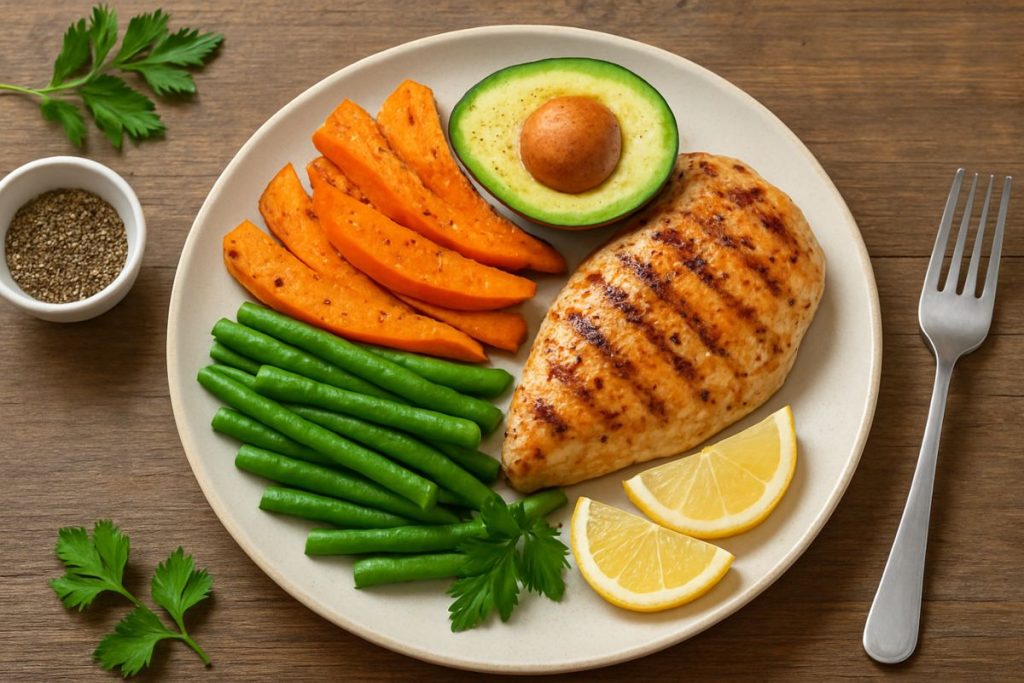
Planning ahead can make healthy dinners even easier. Consider prepping vegetables or cooking grains in advance so assembling dinner takes minutes. Use quick cooking methods like stir-frying, broiling, or pressure-cooking to save time. Incorporate easy healthy dinner ideas such as salads and bowls with pre-washed greens, canned beans, rotisserie chicken or tofu. Even simple combinations – grilled chicken with steamed veggies, or a veggie omelette with a side salad – can be balanced, wholesome meals on busy nights.
Below are 10 easy and healthy dinner ideas to inspire your weekly menu. Each idea emphasizes lean protein, whole grains or legumes, and plenty of vegetables. We’ve included options for various needs: family dinners, quick weeknight meals, budget-friendly dishes, heart-healthy recipes, and more. Each is tasty, satisfying, and aligned with current nutrition guidance.
1. Grilled Salmon with Quinoa & Roasted Vegetables
Start with a heart-healthy entree: a grilled or baked salmon fillet. Salmon is rich in omega-3 fatty acids and protein, which can help lower cholesterol. Season the fish with lemon juice, garlic and herbs, then grill or pan-sear it until flaky. Serve alongside a scoop of cooked quinoa (a whole grain) and a mix of roasted vegetables – for example, broccoli, carrots and bell peppers. Toss the veggies with a little olive oil, salt, pepper and roast at 400°F for 20–25 minutes until tender.
This dinner is quick, flavorful, and balanced: salmon provides lean protein (omega-3 rich and low in saturated fat), quinoa adds fiber and whole grains, and the veggies supply vitamins, minerals and color. As Harvard nutritionists point out, a typical healthy meal often features fish or tofu plus plenty of vegetables. (Dr. Toni Golen, for instance, enjoys grilled salmon with a big salad as a “go-to” healthy dinner.) Pair with a squeeze of lemon and a side salad or steamed greens.
Why it’s healthy:
- Lean protein: Salmon or other fatty fish (tuna, trout) is heart-healthy and filling.
- Whole grain: Quinoa or brown rice instead of white rice adds fiber and nutrients.
- Veggies: Roasting a mix of vegetables like broccoli, zucchini, carrots brings vitamins and antioxidants to the plate.
- Quick & easy: Grill the fish while the veggies roast in the oven. Total time ~30 minutes.
2. Chicken and Vegetable Stir-Fry with Brown Rice
A stir-fry is an ideal quick healthy dinner idea for busy nights. Use skinless chicken breast (thinly sliced) or tofu for protein. In a hot pan or wok, sauté the chicken with a little oil, ginger, garlic and low-sodium soy or tamari. Add a colorful medley of chopped vegetables – such as broccoli, snap peas, bell pepper, carrots, or bok choy – and stir-fry until crisp-tender. Finish with a splash of low-sodium chicken broth or a light sauce (try teriyaki or peanut-based sauces) and toss to coat.
Serve over brown rice or cauliflower rice for a healthier base. This meal can be on the table in under 20 minutes. It’s family-friendly (kids often enjoy stir-fries with familiar veggies) and fully customizable. For more flavor, marinate the chicken beforehand in garlic, soy sauce and honey. AHA experts recommend adding skinless poultry or fish to meals for satisfaction and nutrition.
Why it’s healthy:
- High protein: Chicken or tofu provides lean protein to keep you full.
- Veggie variety: Toss in any veggies you like – green beans, mushrooms, peppers, bok choy – for nutrients and color.
- Whole grains: Serve with brown rice, barley or quinoa to boost fiber.
- Fast & flavorful: Stir-fry cooking is quick and preserves nutrients. Use herbs and spices (ginger, garlic, chili flakes) for taste instead of extra salt.
3. Mediterranean Chickpea Bowl
For a plant-forward dinner, try a Mediterranean-style bowl. Start with a base of cooked whole grains (quinoa or farro) or even whole-wheat couscous. Top it with protein-rich chickpeas (garbanzo beans), either canned (rinsed) or roasted for crunch. Add plenty of veggies: cherry tomatoes, cucumber, chopped bell peppers, shredded carrot, olives and feta or avocado. A squeeze of lemon juice, chopped parsley, a drizzle of olive oil and a sprinkle of za’atar or oregano ties it all together.
This is a vegetarian and heart-healthy dinner idea high in fiber and antioxidants. EatingWell notes that combining grains (like farro) with beans, leafy greens and colorful vegetables creates a meal rich in fiber and plant protein – ideal for satiety and healthy weight. It’s a light yet filling dinner, perfect for summer or any time.
Why it’s healthy:
- Plant protein: Chickpeas (or other beans) add protein and fiber, helping you feel satisfied.
- Veggies & herbs: Mediterranean salads are loaded with vegetables, herbs and healthy fats (olive oil) for heart benefits.
- Whole grains: Use quinoa, bulgur or brown rice for extra nutrients.
- Flexible: This bowl works warm or cold and can be prepped ahead. Top with tzatziki or hummus if desired.
4. Hearty Lentil and Vegetable Soup (Slow Cooker or Instant Pot)
Nothing beats a big pot of homemade soup for comfort and nutrition. A vegetable-lentil soup is easy to make and great on a budget. In a slow cooker or large pot, combine dried lentils (red, green or brown), chopped onions, carrots, celery, garlic and diced tomatoes. Pour in low-sodium vegetable or chicken broth, and season with herbs (thyme, bay leaf, cumin) and pepper. Cook until the lentils are tender and the flavors meld (about 1 hour on stovetop or 20 minutes in a pressure cooker). Add greens like spinach or kale at the end for extra vitamins.
This soup is low-fat and filling – the high fiber content of lentils and veggies helps curb hunger. It’s also heart-healthy and suitable for weight loss: the ingredients are naturally low in calories but full of nutrients. Make a large batch to have leftovers (freeze portions) and cut down cooking time on busy nights.
Why it’s healthy:
- Budget-friendly: Lentils and vegetables are cheap, making this a “cheap healthy dinner idea.”
- Fiber-rich: Lentils, beans and veggies pack fiber, which aids digestion and fullness.
- Customizable: Swap in any veggies or spices you have.
- Protein: Lentils provide plant-based protein, especially good for vegetarians.
5. Chicken Fajita Sheet-Pan Dinner
Turn taco night into a healthy sheet-pan meal. On a baking sheet, arrange sliced boneless, skinless chicken breast strips, sliced onions, and sliced bell peppers. Drizzle with olive oil and sprinkle with fajita seasoning (chili powder, cumin, garlic powder, paprika). Bake at 425°F for 20–25 minutes, stirring halfway, until the chicken is cooked through and the vegetables are tender. Serve with warm whole-wheat tortillas or lettuce wraps, plus toppings like shredded lettuce, diced tomatoes, avocado, salsa and a dollop of Greek yogurt or low-fat sour cream.
This family-friendly dinner is easy to prepare with minimal cleanup. Lean chicken provides protein without much fat, and the colorful peppers and onions are rich in vitamins. By using whole-wheat tortillas (or skipping tortillas), you keep this meal high in fiber. Add a side of black beans or corn salsa for even more fiber and nutrients.
Why it’s healthy:
- Lean protein: Chicken is seasoned and roasted, keeping fat content low.
- Veggie-loaded: Bell peppers are high in vitamin C and antioxidants.
- Kid-friendly: The familiar flavors of fajitas make this appealing to children too.
- Versatile: Use tofu or shrimp as alternatives to chicken for a change-up.
6. Veggie-Stuffed Bell Peppers
Stuffed bell peppers make a colorful and nutrient-packed meal. Slice the tops off bell peppers and remove seeds. Fill them with a mixture of cooked quinoa or brown rice, black beans or lentils, corn, diced tomatoes, onions and spices (cumin, chili powder). You can add a little shredded cheese on top or mix in some tomato sauce. Bake at 375°F for about 30 minutes, until the peppers are tender and the filling is hot.
Ultimate Guide: How to Fix Xbox Series X Slow Boot Issues Fast
This is a vegetarian dinner idea that’s both filling and nutritious. The combination of grains and beans provides a complete protein, and the peppers themselves offer vitamins A and C. It’s also an easy way to repurpose leftovers (use leftover rice or cooked veggies in the filling). Serve with a side salad or yogurt dip.
Why it’s healthy:
- Complete nutrition: Each pepper is like a mini-meal with carbs (rice), protein (beans), and veggies.
- Fiber-filled: Beans and vegetables increase fiber intake.
- Flavorful: Season the filling with herbs, salsa, or low-sodium sauces for taste without extra salt.
- Fun & flexible: Change the stuffing ingredients to use what you have on hand (e.g., ground turkey, tofu).
7. Grilled Shrimp Skewers with Whole Grain Couscous and Salad
Fire up the grill for an easy healthy summer dinner idea. Thread peeled shrimp onto skewers, and brush with a mix of olive oil, lemon juice, garlic and paprika. Grill for 2–3 minutes per side until pink. Meanwhile, cook whole-wheat couscous or bulgur wheat (they take only 5–10 minutes). Serve the grilled shrimp over the couscous alongside a simple green salad (mixed greens with cucumber, cherry tomatoes, and a light vinaigrette).
Seafood like shrimp or fish is an excellent lean protein that’s low in calories. Combined with a whole grain and fresh salad, this meal is light yet satisfying – perfect for a warm evening. Grilling adds flavor without needing heavy sauces. For a heart-healthy boost, use olive oil in the couscous and salad dressing.
Why it’s healthy:
- Lean protein: Shrimp or any grilled fish provides protein and omega-3s with minimal saturated fat.
- Whole grain: Couscous, farro or barley adds fiber and B vitamins.
- Seasonal: Light, refreshing, and great for outdoor cooking.
- Balance: This meal covers protein, grains, and vegetables for a complete dinner.
8. Whole-Wheat Pasta with Chicken, Spinach, and Tomatoes
Pasta can be healthy when made with whole-wheat or legume-based noodles and lots of veggies. Try penne with chicken and broccoli – this is actually one of Dr. Howard LeWine’s favorite healthy dinners. Sauté diced chicken breast in olive oil with garlic and tomatoes, then toss in cooked whole-wheat pasta and steamed broccoli. Finish with a handful of baby spinach and grated Parmesan (or skip the cheese for a lighter dish).
You’ll get lean protein from the chicken and vitamins from the veggies. If red sauce is preferred, use a low-sugar marinara with added veggies. Serve with a side of mixed greens or a citrus salad. This dish is easy to prep and family-pleasing – even better, cook extra pasta the next night as a cold pasta salad for lunch.
Why it’s healthy:
- Whole grain: Whole-wheat pasta offers more fiber than regular pasta.
- Colorful veggies: Tomatoes and spinach boost vitamin A and lycopene.
- Lean protein: Chicken breast keeps it light.
- Inspiration: As Harvard notes, combining pasta with broccoli and chicken (and an olive oil dressing) makes a balanced, satisfying meal.
9. Vegetable Frittata or Omelette
Eggs aren’t just for breakfast – a veggie-packed frittata or omelette is an easy healthy dinner any night. Whisk eggs or egg whites with a splash of milk, season with pepper and a pinch of salt. Pour into a non-stick pan and add chopped vegetables (spinach, mushrooms, peppers, onions) and a little cheese. Cook until set, finishing under the broiler if needed to brown the top. Cut into wedges and serve with whole-grain toast or a side salad.
This meal is high in protein and quick to assemble. It’s also budget-friendly, using whatever veggies and cheese you have on hand. Spinach, peppers and mushrooms add fiber and nutrients, while the eggs provide lasting fullness.
Why it’s healthy:
- Protein: Eggs are a complete protein source.
- Low carb: Great for a lighter dinner or those watching carbohydrates.
- Quick prep: Ready in 15 minutes.
- Versatile: Add herbs, lean ham, or tomatoes based on preference.
10. Black Bean and Avocado Taco Bowl
For a Mexican-inspired healthy dinner, make a taco bowl. In a bowl, layer: cooked brown rice or quinoa, black or pinto beans (seasoned with cumin and chili powder), shredded lettuce, diced tomatoes, corn kernels, and sliced avocado. Top with salsa or pico de gallo and a dollop of Greek yogurt (or plain yogurt) instead of sour cream. You can also add grilled shrimp or chicken for extra protein.
This is a vegetarian or low-carb dinner idea (omit rice or use cauliflower rice) that’s filling and full of flavor. It combines healthy dinner ideas like fiber-rich legumes, monounsaturated fats (avocado), and lots of fresh veggies. This can be a fun “build-your-own” family meal too – set out the components and let everyone assemble their bowl.
Why it’s healthy:
- Nutrient-dense: Beans and avocado deliver fiber, protein, and healthy fats.
- Customizable: Make it vegan, vegetarian, or with shrimp/chicken.
- Flavorful: Mexican spices and salsa pack in flavor without adding many calories.
- Good for weight loss: Packed with protein and fiber, these bowls help you feel full, which can support weight goals.
Frequently Asked Questions (FAQ)
Q: What are some quick and easy healthy dinner ideas?
A: Choose simple recipes like stir-fries, grilled proteins with veggies, or one-pan meals. For example, a chicken and broccoli stir-fry, grilled salmon with a salad, or a veggie omelette can be ready in under 30 minutes. Using pre-chopped vegetables or frozen produce speeds up prep.
Q: How can I make healthy dinners on a budget?
A: Focus on affordable staples: beans, lentils, eggs and frozen vegetables. Make large batches of soups or stews (like lentil soup) to eat over several nights. Shop seasonal produce and look for sales. Plan meals so nothing goes to waste (e.g., use leftover veggies in omelettes or stir-fries).
Q: What are healthy dinner ideas for weight loss?
A: Emphasize lean proteins and fiber to stay full on fewer calories. Salads topped with grilled chicken or fish, vegetable soups, or bowls with beans and whole grains are great. Portion control also matters: try using smaller plates and include lots of veggies. Dietitians recommend balanced meals (veggies, protein, whole grains, healthy fat) to aid weight loss.
Q: Any suggestions for healthy family dinners?
A: Family meals should be nutritious yet appealing to all ages. Sheet-pan dinners (like chicken fajitas or baked fish with potatoes) and build-your-own bowls (taco bowls or pasta bars) are interactive and fun. Involve kids in meal prep or let them choose one veggie. Keep flavors familiar but healthy, and swap fries for roasted vegetables.
Q: How do I scale recipes for two people?
A: Many recipes easily halve. For example, cook one chicken breast instead of two, or use one box of whole-wheat pasta for two. If a recipe yields more, have leftovers (good for lunch) or freeze extra. One-pan meals and omelettes naturally serve one or two, making them ideal healthy dinner ideas for two.
Q: What makes a dinner “heart-healthy”?
A: Heart-healthy dinners focus on unsaturated fats, lean proteins (fish, chicken, beans), and lots of vegetables and whole grains. Limit red meat and processed foods. Harvard experts recommend dinners like grilled fish or tofu with vegetables to support cardiovascular health.
In conclusion, these 10 easy, healthy dinner ideas combine flavor with nutrition, helping you meet dietary goals without sacrificing taste. Each recipe emphasizes lean protein, whole grains or legumes, and a rainbow of vegetables – the keys to a balanced dinner. Try rotating through these meals all week: you’ll be supporting weight management, heart health, and overall wellness with every bite. Which of these recipes will you cook first? Let us know in the comments, and don’t forget to share these healthy dinner ideas with friends and family who want easy, nutritious meal inspiration!
